

Description
Buy LSD Blotter 500mcg
lsd blotter, or lysergic acid diethylamide, is a well-known compound in psychedelic research. Chemically, it belongs to the ergoline family and has strong effects on perception, cognition, and mood. Researchers often study LSD to understand brain function, sensory perception, and neurochemical pathways. Its potency and complexity make it a central subject in psychopharmacology.
What Is an LSD Blotter?
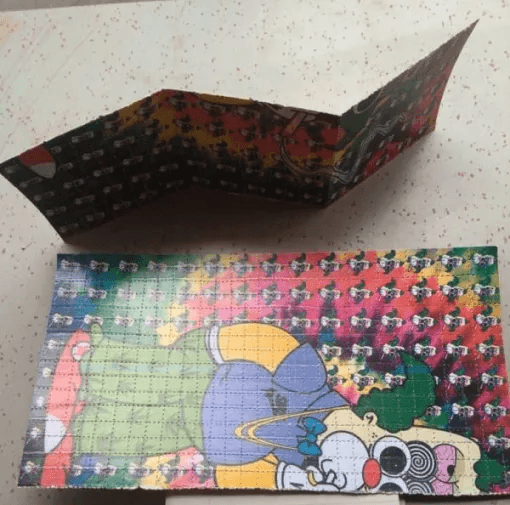
LSD commonly appears on blotter paper, which is perforated into small squares. Each square, or tab, can contain precise microgram doses. Some researchers examine the paper to see how LSD distributes across the surface. Tabs may also feature printed images or colors, which are mostly decorative. Additionally, LSD can exist in liquid form or as gelatin squares, both studied in controlled laboratory settings.
Scientific discussions sometimes include questions like “Can you cut an LSD blotter in half?” or “Does ink give LSD blotter a taste?” In research contexts, cutting blotters is primarily considered for experimental accuracy, and the presence of ink or printing does not significantly change the chemical concentration in controlled tests.
Chemical and Structural Overview
LSD’s chemical name is lysergic acid diethylamide. Its structure contains a polycyclic ergoline backbone. This arrangement interacts with serotonin receptors, particularly 5-HT2A, producing measurable effects on neural activity. Laboratories analyze LSD for structure, stability, and pharmacological properties. The 500mcg dose used in research studies provides a strong model for exploring perceptual and cognitive mechanisms.
Effects Observed in Research
Scientific studies show that LSD alters sensory perception and cognition. These effects vary depending on dose, individual physiology, and environmental factors. Observations include:
Physical effects:
- Changes in pupil size
- Increased heart rate and blood pressure
- Altered body temperature
- Tremors and restlessness
Cognitive effects:
- Accelerated thought processes
- Heightened creativity
- Altered sense of time and self
- Enhanced introspection
Perceptual effects:
- Visual or auditory distortions
- Sensory crossover (e.g., synesthesia)
- Intensified colors and sounds
Researchers note that higher doses can produce profound perceptual shifts and psychological challenges. Laboratory safety protocols ensure controlled environments to reduce risk during studies.
Handling and Safety
In research, LSD is treated as a non-consumable research compound. Laboratories store it in cool, dry conditions, away from light. Researchers wear protective equipment and follow strict guidelines to ensure safety and maintain sample integrity.
Educational discussions about LSD, LSD blotter paper, and dosage questions help students and researchers understand its properties. Focusing on science and harm reduction ensures that curiosity is met with accurate and responsible information.



Reviews
There are no reviews yet.