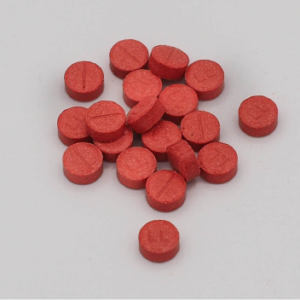
About LSD
LSD, or lysergic acid diethylamide, is a well-known compound studied in neuroscience and psychology. It is a powerful chemical that can alter perception, thought, and mood. Researchers examine LSD to understand how the brain processes sensory input and cognition. Its effects are linked to the serotonin system, which plays a key role in regulating mood and awareness.
Chemical Overview
LSD is a synthetic derivative of lysergic acid, a compound found in the ergot fungus. Pure LSD appears as a colorless, odorless crystalline substance. It is extremely potent, with effects noticeable at microgram doses. Scientists use LSD in controlled experiments to explore brain function and perception. The molecule interacts mainly with 5-HT2A serotonin receptors, which influence sensory and cognitive processes.
Forms of LSD
LSD can appear in different research formats. The most common forms include:
- Blotter paper: Small, perforated squares often used for standardized doses in laboratory studies.
- Gel tabs: Thin, colored squares designed for precise measurement.
- Liquid form: Clear solutions for controlled experiments.
Each form allows researchers to study dosage, stability, and absorption accurately.
Effects Observed in Research
LSD produces a range of effects on the brain and body. Controlled studies reveal changes in perception, cognition, and sensory processing. Common observations include:
Perceptual effects:
- Visual or auditory distortions
- Altered perception of shapes, colors, and patterns
- Crossed senses, known as synesthesia
Cognitive effects:
- Enhanced creativity
- Altered sense of time
- Changes in introspection and self-awareness
Physical effects:
- Pupil dilation
- Mild increases in heart rate and blood pressure
- Changes in body temperature
Researchers note that responses vary depending on dosage, environment, and individual factors. Laboratory studies prioritize safety and controlled conditions.
History and Research Context
LSD was first synthesized in 1938 by Albert Hofmann. He discovered its hallucinogenic properties in 1943. Since then, LSD has been a focus in neuroscience, psychology, and spiritual research. Although LSD has no officially approved medical use, studies continue to explore its potential in understanding perception, mood disorders, and cognitive function.
Handling and Safety in Research
LSD is a research compound. Laboratories store it in cool, dry environments, away from light to prevent breakdown. Scientists follow strict safety protocols when handling the substance. Educational content about LSD helps students and researchers understand its chemical structure, effects, and experimental uses safely and responsibly.
-
Add to WishlistAdd to Wishlist

-
-
-
-
-
Add to WishlistAdd to Wishlist

-
-
-
Add to WishlistAdd to Wishlist

-